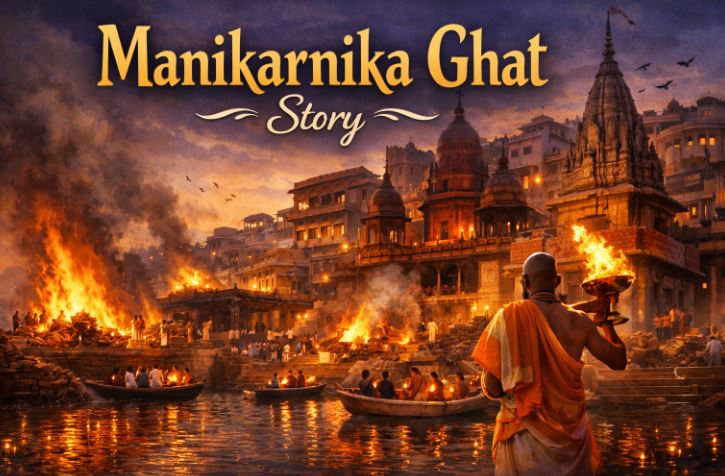
Manikarnika Ghat is one of the most sacred and mysterious places in Varanasi, the spiritual capital of India. Located on the banks of the holy River Ganga in Uttar Pradesh, this ghat is famous as the main cremation ground where Hindu funeral rituals are performed day and night. According to Hindu beliefs, anyone who is cremated at Manikarnika Ghat attains moksha (liberation from the cycle of birth and death).
The story of Manikarnika Ghat is deeply connected with Lord Shiva, Goddess Parvati, and Lord Vishnu. For centuries, pilgrims, saints, and devotees have been drawn to this holy place not only for religious rituals but also to understand the profound philosophy of life and death.
This article explores the Manikarnika Ghat story, its mythology, religious significance, and spiritual importance in Hindu tradition.
The Meaning of Manikarnika
The name Manikarnika comes from two Sanskrit words:
- Mani – meaning jewel
- Karnika – meaning ear
Together, Manikarnika means “the jeweled earring.”
According to Hindu mythology, the name originated from a divine incident involving Lord Shiva and Goddess Parvati, whose jeweled earring fell at this very spot. This sacred event gave the ghat its unique name and immense religious importance.
The Mythological Story of Manikarnika Ghat
The most popular story of Manikarnika Ghat is mentioned in ancient Hindu scriptures and legends related to Lord Shiva and Lord Vishnu.
According to mythology, once Lord Vishnu performed intense penance (tapasya) in Varanasi to please Lord Shiva. During his meditation, Vishnu dug a sacred pond using his Sudarshan Chakra and filled it with his sweat. This holy water body is known as Manikarnika Kund.
While Lord Vishnu was meditating, Lord Shiva and Goddess Parvati came to observe his devotion. During this visit, Goddess Parvati’s jeweled earring (Manikarnika) accidentally fell into the kund.
Lord Shiva asked his followers to search for the earring, but it was never found. According to legends, the earring is still hidden somewhere in the sacred waters of the kund. Because of this divine incident, the place came to be known as Manikarnika Ghat.
Also Read:Hotels in Varanasi Near Manikarnika Ghat – Best Stay Options for Pilgrims and Travelers
Connection of Manikarnika Ghat with Moksha
Manikarnika Ghat holds immense importance in Hindu beliefs regarding life, death, and liberation.
It is believed that Lord Shiva himself whispers the “Taraka Mantra” into the ears of those who are cremated here. This sacred mantra helps the soul attain moksha and escape the cycle of rebirth.
Because of this belief, many elderly devotees and saints come to Varanasi during the final stage of their lives, hoping that their last rites will be performed at Manikarnika Ghat.
The cremation fires at this ghat are said to have been burning continuously for thousands of years, making it one of the oldest active cremation grounds in the world.
The Eternal Flame of Manikarnika Ghat
One of the most fascinating aspects of Manikarnika Ghat is the eternal flame that is believed to have been burning for centuries.
According to tradition, this sacred fire was originally lit by Lord Shiva himself. The fire is carefully preserved and used to light funeral pyres at the ghat. Families performing cremation rituals purchase this holy fire to begin the final rites of their loved ones.
The responsibility of maintaining the cremation process is handled by the Dom community, who have been performing this duty for generations.
Manikarnika Kund – The Sacred Pond
Near the ghat lies Manikarnika Kund, a small sacred pond associated with the mythological story of Lord Vishnu and Goddess Parvati.
Pilgrims believe that the kund contains holy water created during Vishnu’s penance. Devotees often visit this kund to offer prayers before performing religious rituals at the ghat.
The kund is also considered one of the oldest sacred water bodies in Varanasi.
Religious Rituals at Manikarnika Ghat
Manikarnika Ghat is primarily known for Hindu cremation rituals. Unlike other ghats in Varanasi that are used for bathing or religious ceremonies, this ghat is dedicated mainly to funeral rites.
The cremation process usually includes the following steps:
- The body is brought to the ghat on a bamboo stretcher.
- It is dipped in the holy River Ganga.
- The body is placed on a wooden pyre.
- The eldest son or male relative lights the funeral pyre using the sacred flame.
- After the cremation, ashes are immersed in the Ganga River.
Thousands of cremations take place here every year.
Spiritual Significance of Manikarnika Ghat
Manikarnika Ghat represents the philosophy of impermanence. It reminds visitors that life is temporary and that death is a natural part of existence.
In Hindu philosophy, death is not seen as an end but as a transition to another spiritual journey. Witnessing the rituals at this ghat often leaves visitors with a deep understanding of the cycle of life.
For many spiritual seekers, Manikarnika Ghat is a place to reflect on detachment, karma, and liberation.
Manikarnika Ghat in Modern Times
Today, Manikarnika Ghat is one of the most visited places in Varanasi. Pilgrims from across India and around the world come here to witness its unique spiritual atmosphere.
Although photography is generally discouraged during cremation rituals, tourists often observe the ghat respectfully from boats on the Ganga River.
The ghat also attracts researchers, spiritual seekers, and cultural enthusiasts who want to understand the traditions and rituals associated with Hindu funerary practices.
Interesting Facts About Manikarnika Ghat
Here are some fascinating facts about this sacred place:
- Manikarnika Ghat is the largest cremation ground in Varanasi.
- The funeral pyres here burn 24 hours a day, 365 days a year.
- It is believed that cremation here leads to direct moksha.
- The Dom Raja family has been managing cremations for centuries.
- The ghat is located close to the famous Kashi Vishwanath Temple.
Conclusion
The Manikarnika Ghat story is deeply rooted in Hindu mythology and spirituality. From the legend of Goddess Parvati’s lost earring to the belief that Lord Shiva grants liberation to souls cremated here, this sacred place holds immense religious significance.
More than just a cremation ground, Manikarnika Ghat symbolizes the eternal truth of life and death. It serves as a powerful reminder of the spiritual journey of the soul and the ultimate goal of attaining moksha.
For pilgrims, saints, and spiritual seekers, Manikarnika Ghat is not merely a place—it is a gateway to understanding the deeper meaning of existence.
Thank you for visiting iON Digital Zone! We appreciate your time and support. Stay connected for insightful, informative, and valuable multi-niche content curated just for you.
About the Author