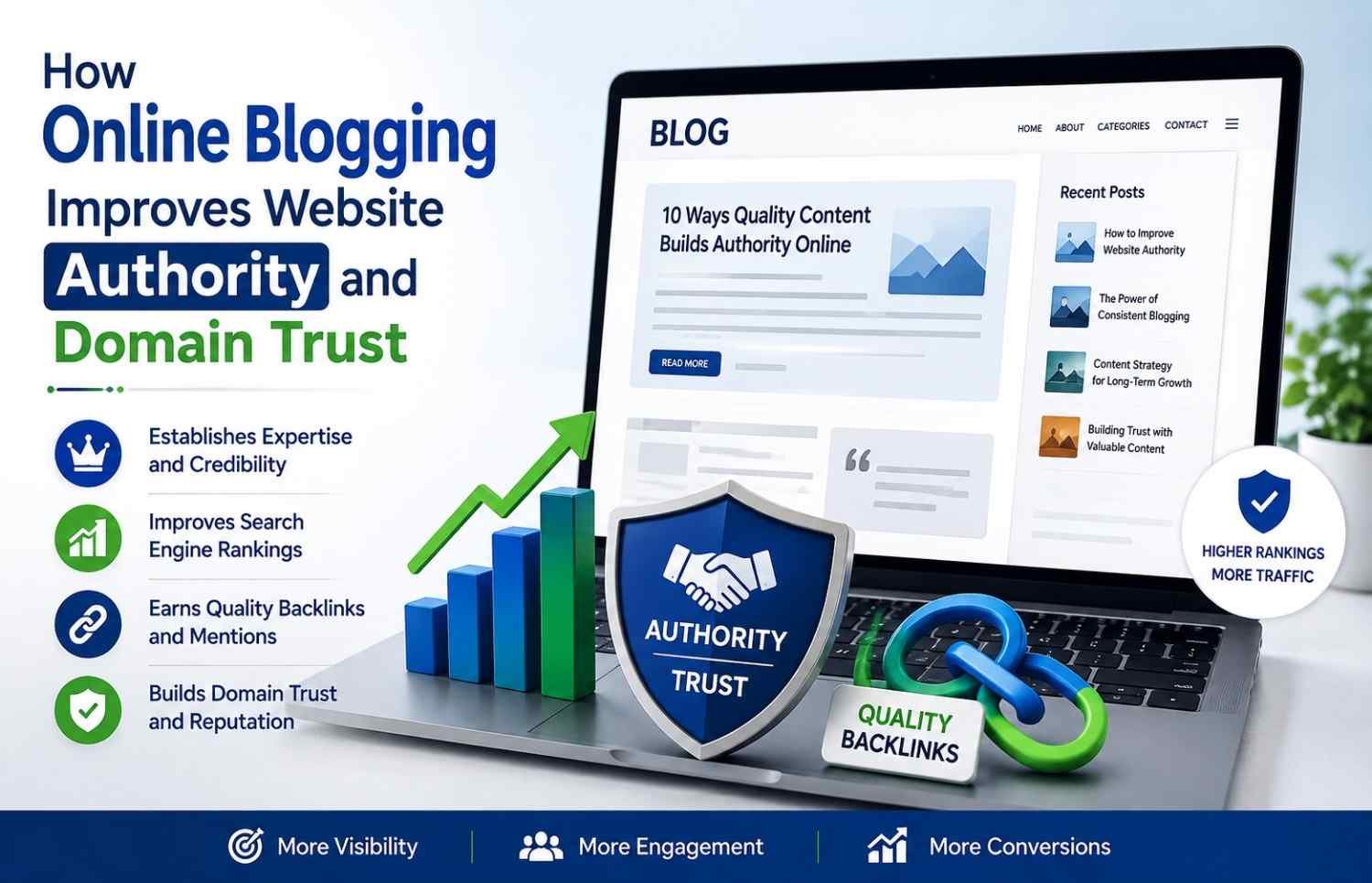
In today’s competitive digital landscape, building a strong online presence is essential for businesses, entrepreneurs, and content creators. One of the most effective ways to strengthen a website’s credibility is through online blogging. Consistent blogging not only helps attract visitors but also improves website authority and domain trust over time. Search engines like Google prioritize websites that regularly publish valuable, relevant, and trustworthy content. This is why businesses across industries are investing in blogging as a long-term SEO strategy.
In this article, we will explore how online blogging improves website authority and domain trust while helping businesses achieve higher search engine rankings and increased organic traffic.
Understanding Website Authority and Domain Trust
Before discussing the benefits of blogging, it is important to understand what website authority and domain trust mean.
Website Authority refers to the overall strength and credibility of a website in the eyes of search engines. Websites with high authority often rank better for competitive keywords because search engines view them as reliable sources of information.
Domain Trust is the level of confidence search engines have in a website. Trust is built through quality content, backlinks, user engagement, and consistent publishing practices.
When a website consistently provides useful information and follows SEO best practices, it gradually earns authority and trust, leading to improved visibility in search results.
The Role of Online Blogging in SEO
Online blogging is one of the most powerful content marketing techniques available today. Every blog post creates a new opportunity for a website to rank in search engines, target relevant keywords, and attract potential customers.
A well-maintained blog helps search engines understand a website’s expertise and relevance within its industry. As more valuable content is published, search engines begin recognizing the website as an authoritative source.
1. Blogging Creates Fresh Content Regularly
Search engines favor websites that are updated frequently. A website with outdated content may lose rankings over time, while a site that consistently publishes new blog posts signals activity and relevance.
Regular blogging provides:
- Fresh content for search engines to index
- More keyword opportunities
- Increased website engagement
- Better crawling frequency
By consistently adding new articles, businesses demonstrate their commitment to providing current and useful information, which helps improve domain trust.
2. Builds Topical Authority
Topical authority is achieved when a website covers a subject comprehensively through multiple related articles.
For example, a digital marketing website can publish blogs on:
- SEO strategies
- Content marketing
- Social media marketing
- Local SEO
- Link building
As more relevant content is published, search engines begin associating the website with expertise in that niche. This increases the likelihood of ranking for a wide range of related keywords.
Online blogging allows businesses to establish themselves as industry leaders while strengthening website authority.
3. Attracts High-Quality Backlinks
Backlinks remain one of the most important ranking factors in SEO.
When you publish informative and valuable blog content, other websites may reference and link to your articles. These backlinks act as votes of confidence and signal to search engines that your content is trustworthy.
Examples of backlink-worthy blog content include:
- Industry guides
- Case studies
- Research reports
- Expert opinions
- Tutorials
The more quality backlinks a website earns through blogging, the higher its domain authority and trust become.
4. Improves User Experience
Search engines evaluate how users interact with a website. If visitors spend time reading blog posts, exploring related content, and engaging with the website, search engines interpret these actions as positive signals.
Blogging improves user experience by:
- Providing helpful information
- Answering customer questions
- Reducing bounce rates
- Increasing session duration
A positive user experience contributes significantly to website trust and long-term SEO success.
5. Expands Keyword Coverage
Every blog post offers an opportunity to target specific keywords and search queries.
Instead of relying solely on service pages or product pages, businesses can create blog content around informational keywords that users search for during the research phase.
For example:
- “How to improve SEO rankings”
- “Benefits of content marketing”
- “Local SEO tips for small businesses”
By covering a broad range of topics, websites increase their visibility and attract visitors from different stages of the customer journey.
Also Read: Ayurvedic Treatment: A Complete Guide to Natural Healing in 2026
6. Demonstrates Expertise and Credibility
Modern SEO focuses heavily on expertise, experience, authority, and trustworthiness.
Publishing educational blog content allows businesses to showcase their knowledge and industry expertise. Readers are more likely to trust websites that consistently provide useful insights rather than purely promotional content.
When visitors find accurate and reliable information on a website, they are more likely to return, share content, and recommend the site to others.
7. Encourages Social Sharing
High-quality blog posts often get shared across social media platforms. Although social signals may not directly influence rankings, increased visibility can generate more traffic, backlinks, and brand recognition.
Benefits of social sharing include:
- Expanded audience reach
- Increased website visits
- More brand awareness
- Greater engagement
These factors indirectly contribute to stronger domain trust and website authority.
8. Supports Internal Linking Strategy
Blogging creates numerous opportunities for internal linking.
By linking blog posts to relevant pages and articles, website owners can:
- Improve site navigation
- Distribute link equity
- Help search engines understand content relationships
- Increase page authority
A strong internal linking structure enhances the overall SEO performance of a website.
Why Choose an Online Blogging Platform?
Using a dedicated blogging platform can simplify content creation and publishing. Platforms like fsiBlog help writers, businesses, and marketers publish high-quality content efficiently while reaching wider audiences.
As an online blogging platform, fsiBlog com enables users to share valuable information, build brand visibility, and establish authority in their respective industries. Consistent publishing on trusted blogging platforms can contribute significantly to long-term SEO growth and domain trust.
Best Practices for Building Authority Through Blogging
To maximize blogging benefits, follow these best practices:
- Publish content consistently.
- Focus on quality over quantity.
- Research relevant keywords.
- Optimize blog posts for SEO.
- Use internal and external links.
- Update older content regularly.
- Create comprehensive and informative articles.
- Promote content across multiple channels.
These strategies help accelerate authority growth while improving user trust and search engine visibility.
Conclusion
Online blogging is one of the most effective ways to improve website authority and domain trust. By consistently publishing valuable content, targeting relevant keywords, attracting backlinks, and demonstrating expertise, businesses can build a strong online reputation that search engines recognize and reward.
Whether you are a startup, small business, or established brand, investing in a strategic blogging approach can generate long-term SEO benefits. Platforms like fsiBlog and fsiBlog com make it easier to share quality content, reach new audiences, and strengthen your website’s authority in an increasingly competitive digital world.
About the Author